Johanna Tinzl
Artist in Residence

Based in: Austria
Participated in: Evia International Residency
Johanna Tinzl (*1976 in Innsbruck, Austria) is a visual artist. Her practice spans a wide range of media and is rooted in a sensitive and participatory engagement with the histories of specific people, communities, places, and landscapes. She explores questions of collective memory and politically motivated processes of representation.
Tinzl has a particular interest in the performativity of historical narratives and in making visible both the global and local dimensions of ecological and technological processes. In her works, which range from fictional to documentary formats, she consistently emphasizes the polyphony of narratives, thereby challenging the hegemonic construction of history.
Tinzl’s works have been exhibited and screened internationally, most recently at the Klima Biennale Wien (2024), Muzeum umění Olomouc (2023), at the Diagonale (2023) and at the Secession in Vienna (2022).
In 2026, Johanna Tinzl has been invited to participate in The Arctic Circle Expeditionary Residency in the Arctic. In 2025, she will participate in the Turning the Tide Artist-in-Residence Program in Evia, Greece. In 2024, she was an Artist-in-Residence at Donumenta in Regensburg, Germany. She received a work grant from the Federal State of Tyrol (AT) in 2023 and was awarded the Austrian State Grant for Visual Arts in 2021. Her previous residencies include the SÍM Program in Reykjavík, Iceland (2019), FILTER Detroit, USA (2016) and Red Gate in Beijing, China (2015).
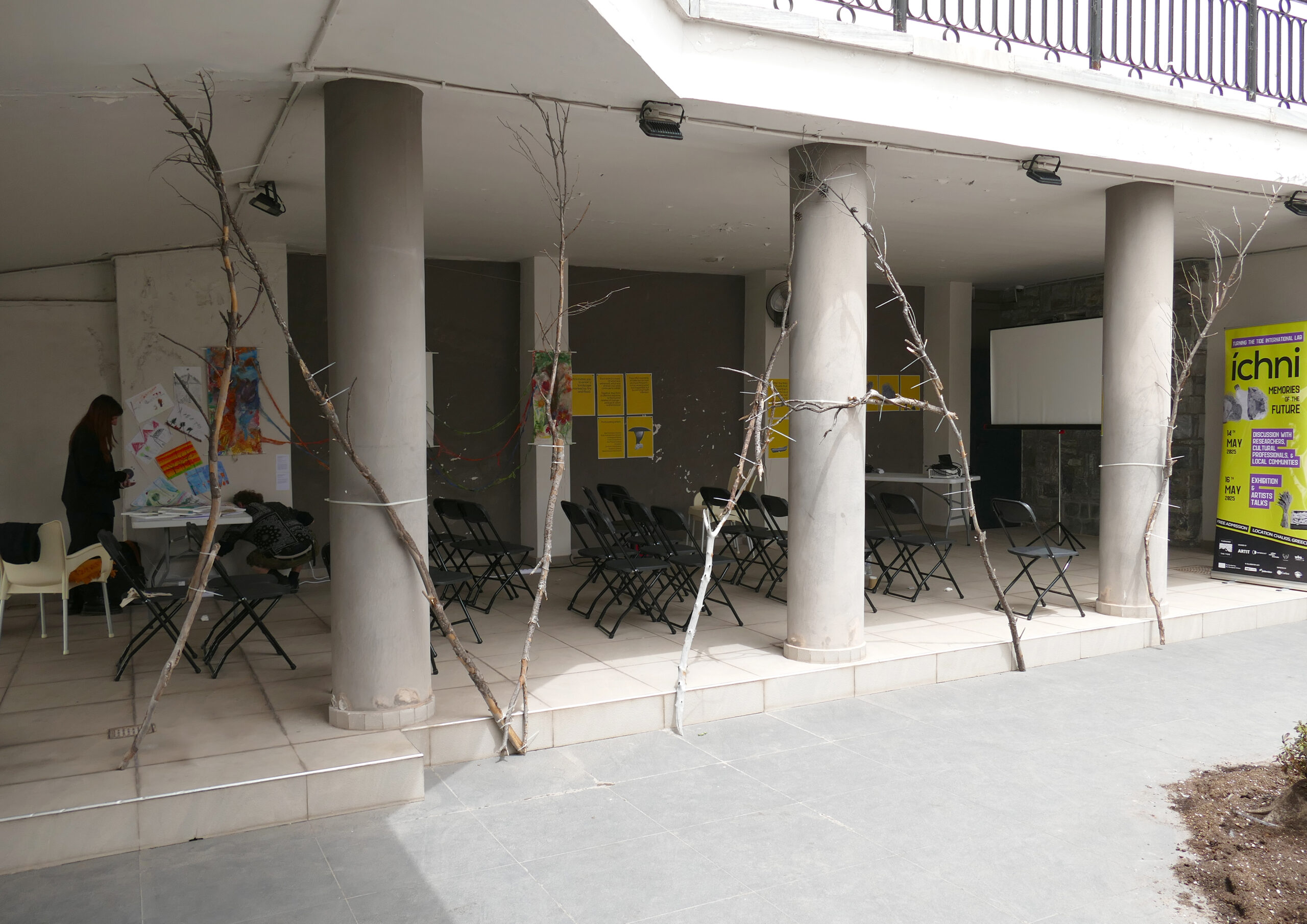
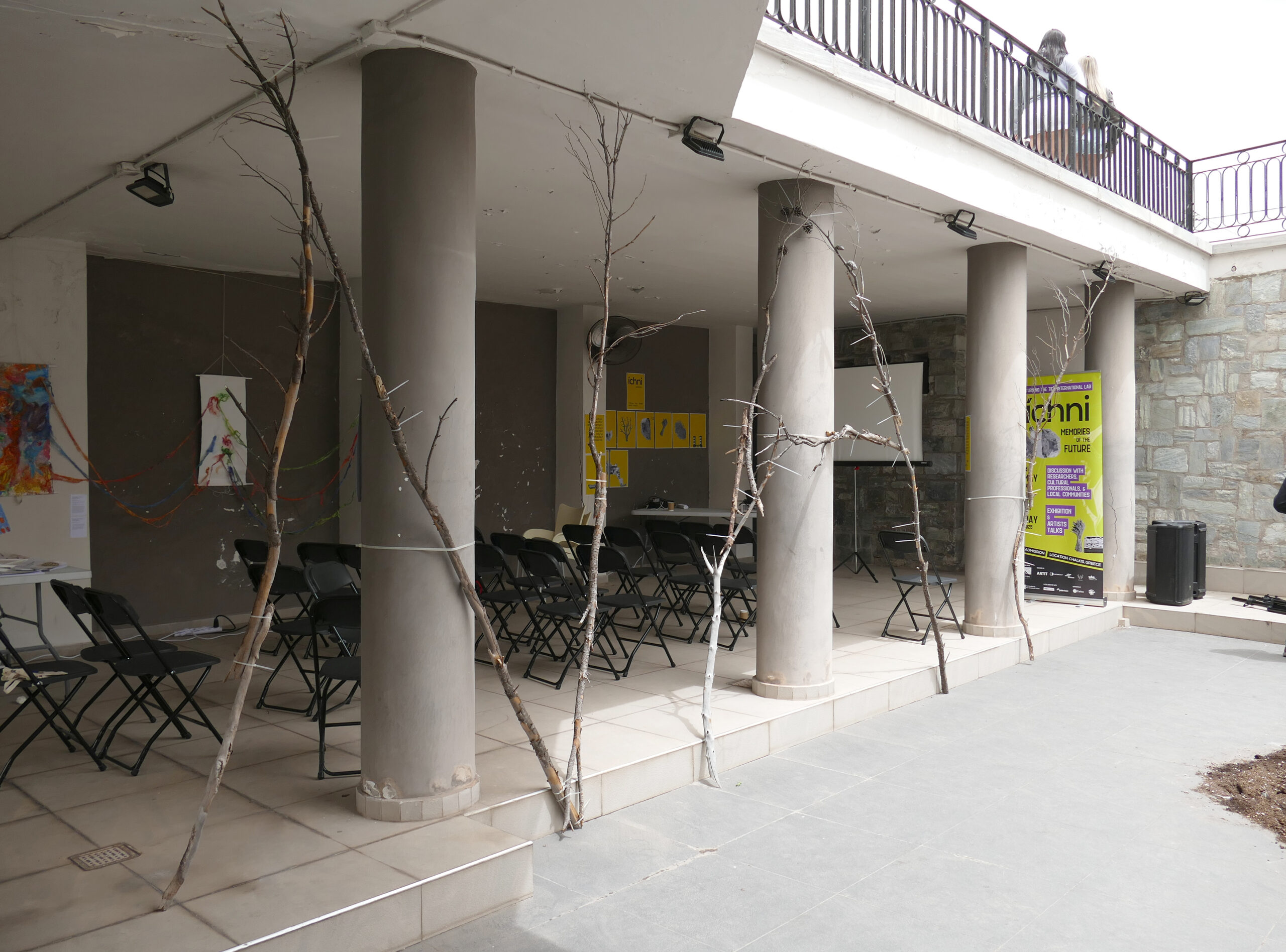
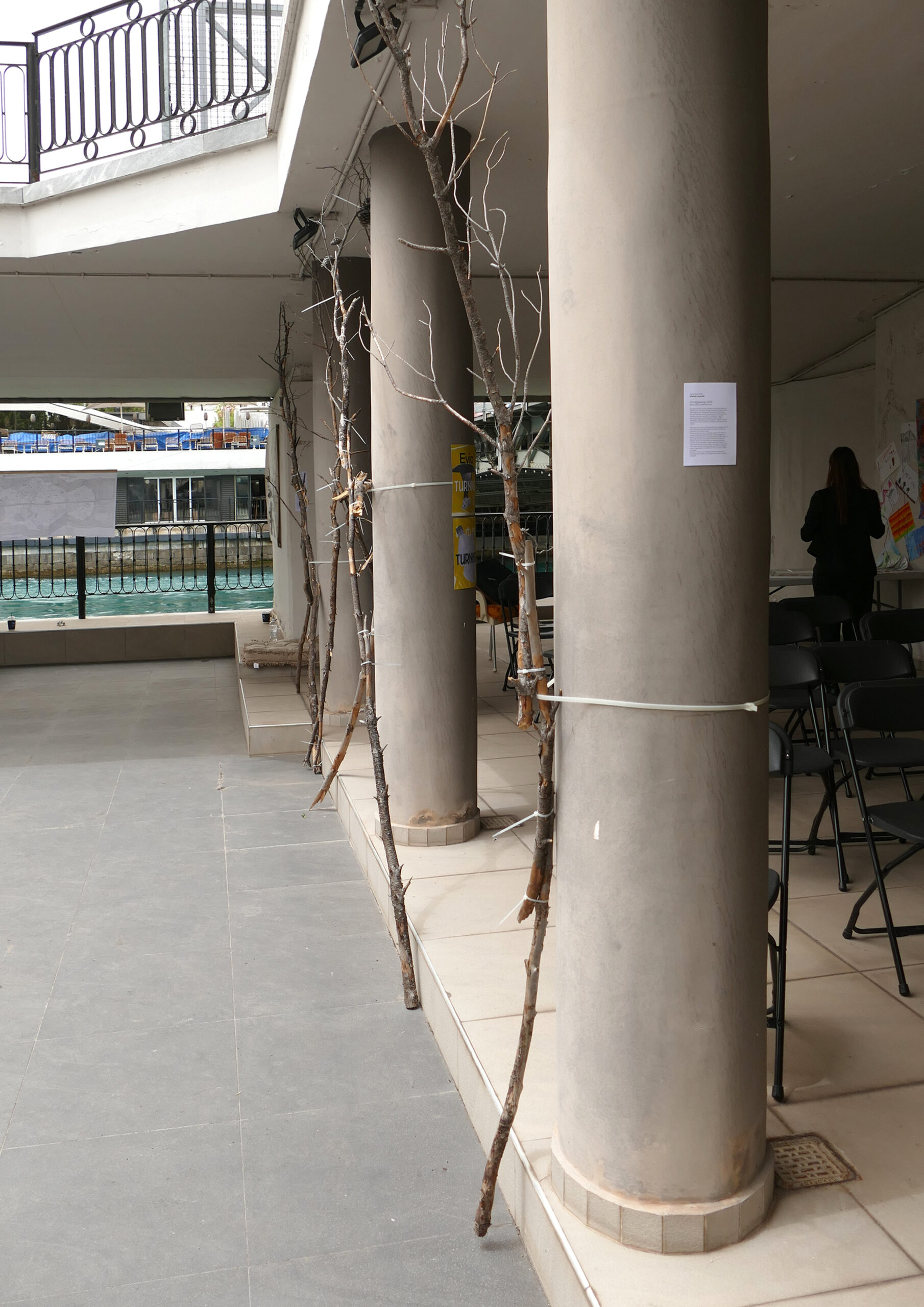
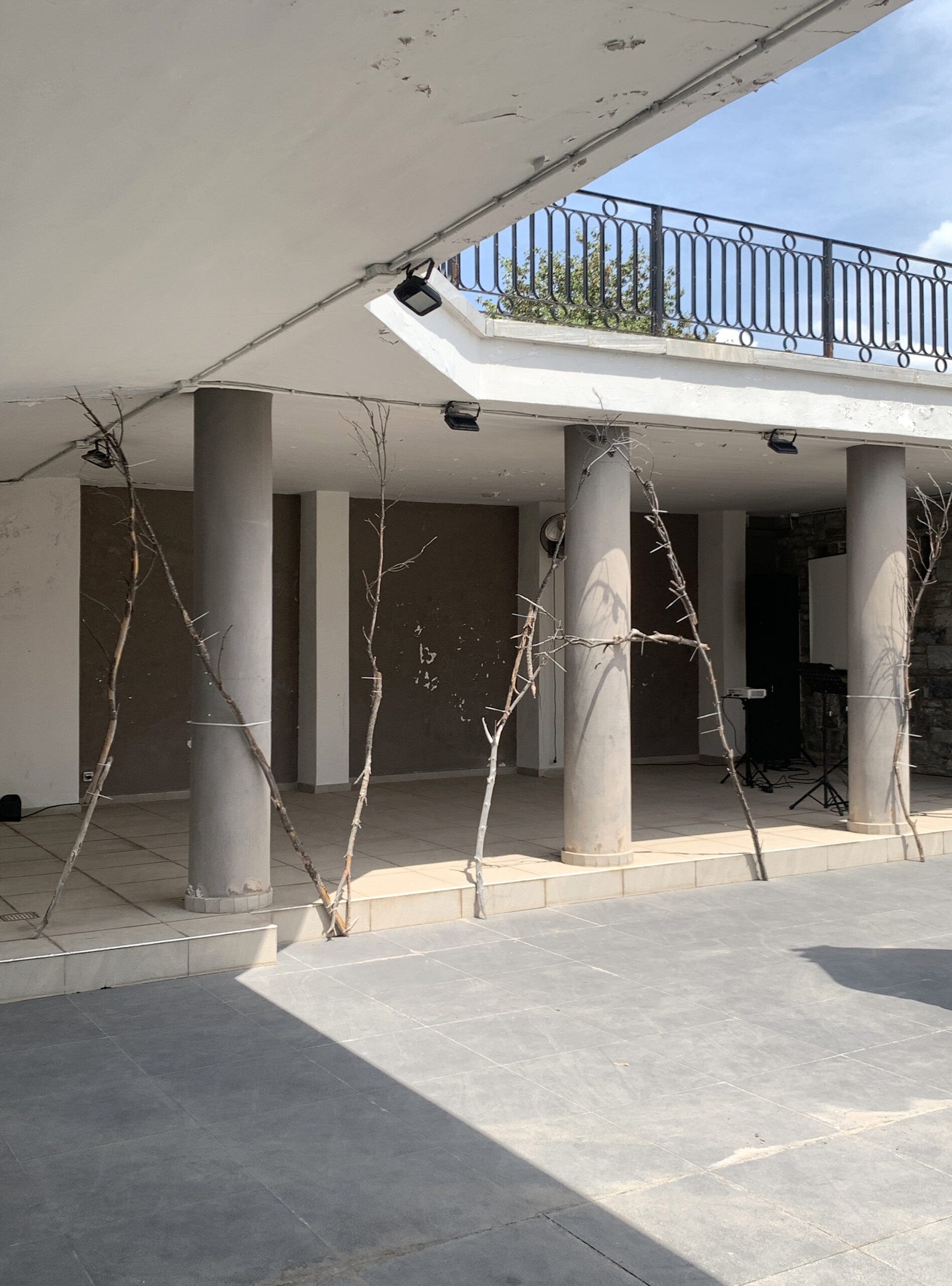
On Agreeing, 2025
During her time in Evia, Johanna has learned that the Greek word OXI (NO), though commonly linked to the 1940 rejection of Mussolini’s ultimatum by dictator Ioannis Metaxas, is today understood more broadly in Greek society as a symbol of resistance against authoritarianism, social injustice, and far-right ideologies. Regardless of its historical origins, OXI has come to represent collective defiance and democratic values.
With this work, she is putting OXI into a dialogue with a NAI (YES) that she has formed from burnt branches collected in Northern Evia.
What actions can we, as citizens, agree to in order to create social justice for all? How can we design our public institutions to be transparent and democratic in ways that prevent corruption? How do we discuss climate action on a local level in ways that actively include the knowledge, experiences, and consent of communities? How can we live in a deeper connection with other people, with animals, and with the natural world, regardless of whether we live in rural or urban settings?
And how can we, as a society, activate a planetary thinking that enables us to collectively tackle climate change?