Gisela Stiegler
Artist in Residence
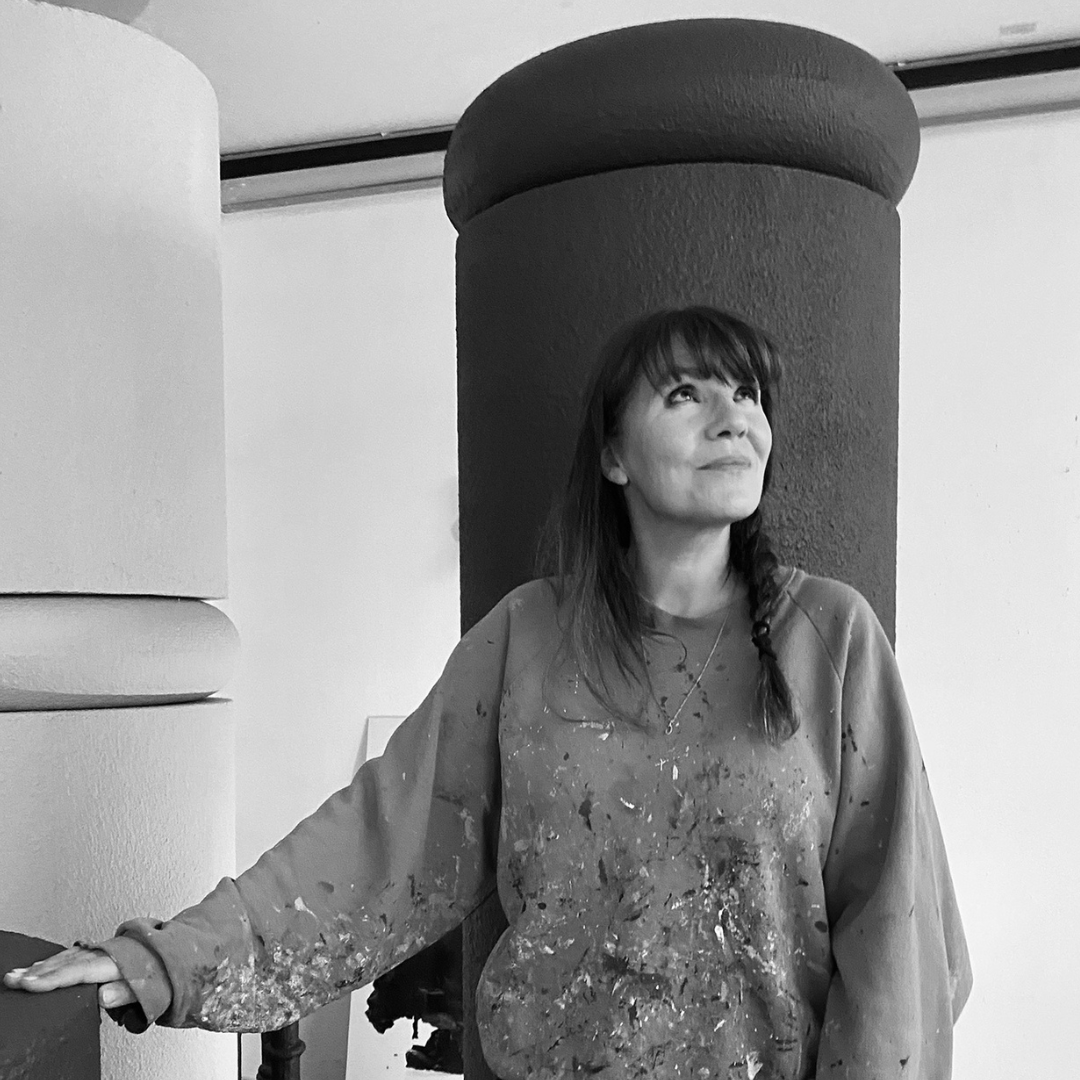
Based in: Austria
Participated in: Stockholm International Residency
Gisela Stiegler (born 1970) is an Austrian visual artist who lives and works in Vienna.
After studying at the University of Applied Arts Vienna, the Gerrit Rietveld Academie in Amsterdam and the Academy of Fine Arts Vienna, Gisela Stiegler has been developing her own unique body of work at the intersection of sculpture, space and colour since the 1990s.
Her artistic practice encompasses carved reliefs and large-format sculptures in which she reinterprets classical forms such as the column. In doing so, she addresses architecture, materiality and social references and questions the relationship between object and space.
Stiegler has received numerous residencies and scholarships, most recently in Stockholm (Turning the Tide, 2025) and Tokyo (2024). Her works in public spaces – such as at the Johannes Kepler University in Linz – demonstrate her consistent exploration of form, colour and spatial effect.
She regularly collaborates with renowned galleries in Austria and abroad, as well as international partners in Japan, France and Germany. Her works have been shown in numerous solo and group exhibitions and are represented in public and private collections.
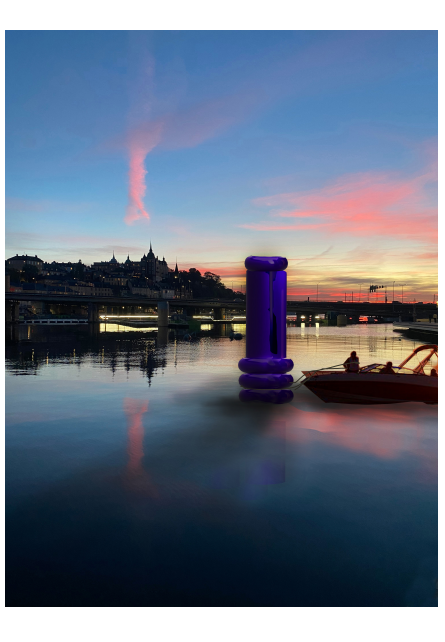
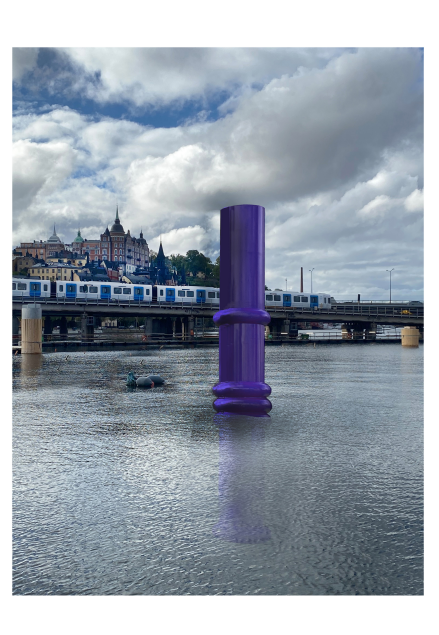
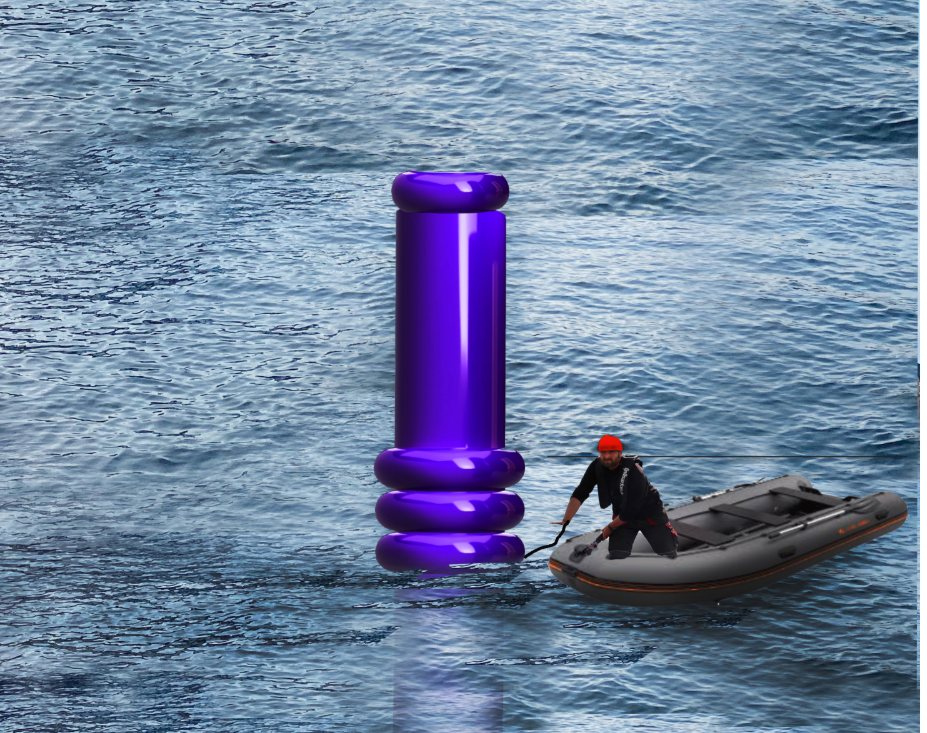
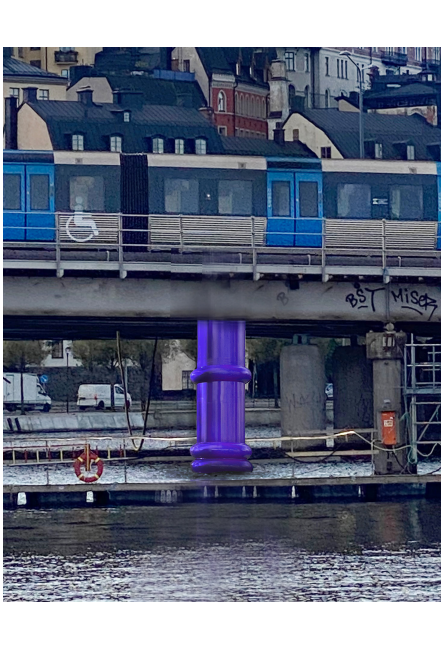
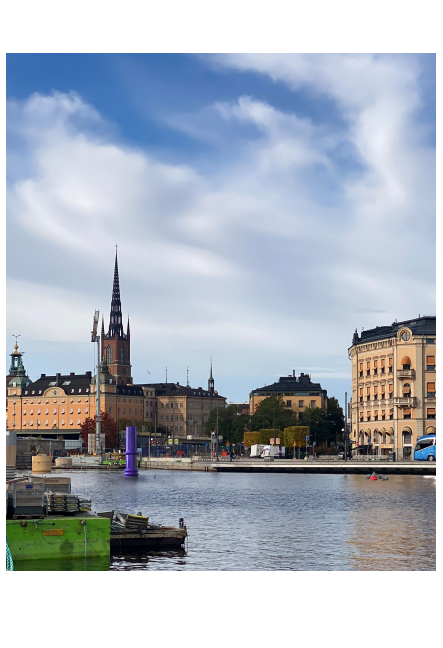
Buoy Sculpture, Collage for Turning the Tide
For Gisela Stiegler, sculpture always has a close relationship with its spatial context. Her works emphasise this context – they make it visible, tangible and meaningful in terms of content. The figure appears like a staffage figure that not only populates the space, but also makes it legible in the first place. It is only through the presence of the figure that the context becomes tangible and comprehensible.
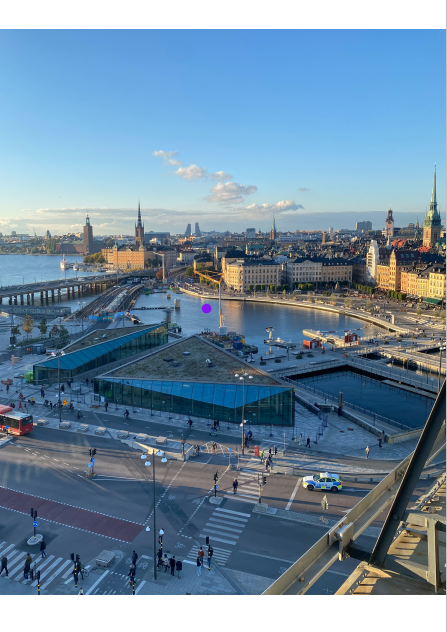
This is also the case with the Turning the Tide 2025 project in Stockholm. She worked on the planning of the buoy sculpture – monument for Turning the Tide.
The floating sculpture in Slussen stands for democracy, change and humanity. At this intersection of city and water, it becomes a symbol of movement, balance and responsibility.
With its form – a four-metre-high purple column resting on a buoy that rises and falls with the water level – it reacts directly to environmental conditions. It makes the change in the water level visible, thus drawing attention to the effects of global warming and rising sea levels.
The Turning the Tide project understands art as a medium for making complex ecological and social issues tangible. Through its aesthetic form and symbolic power, Stiegler’s sculpture encourages reflection on responsibility, change and humanity’s relationship with its environment.