Weronika Zalewska
Artist in Residence

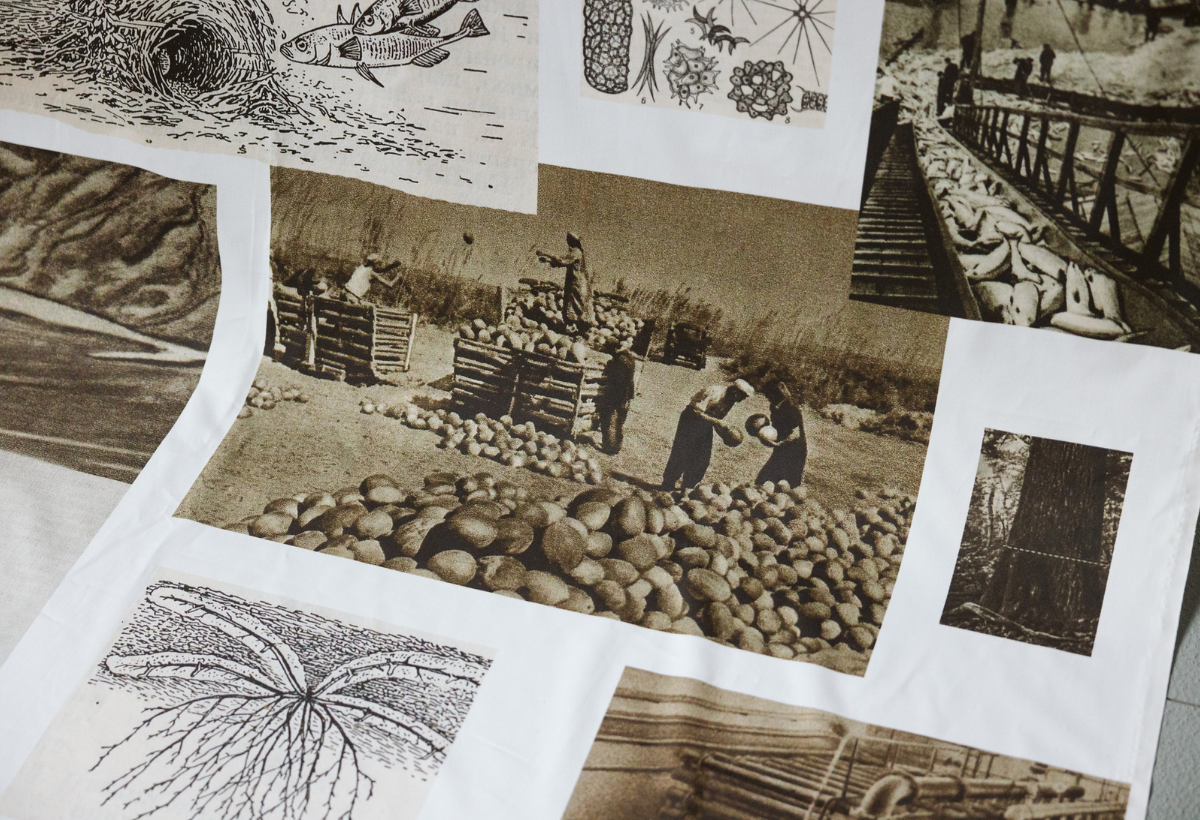
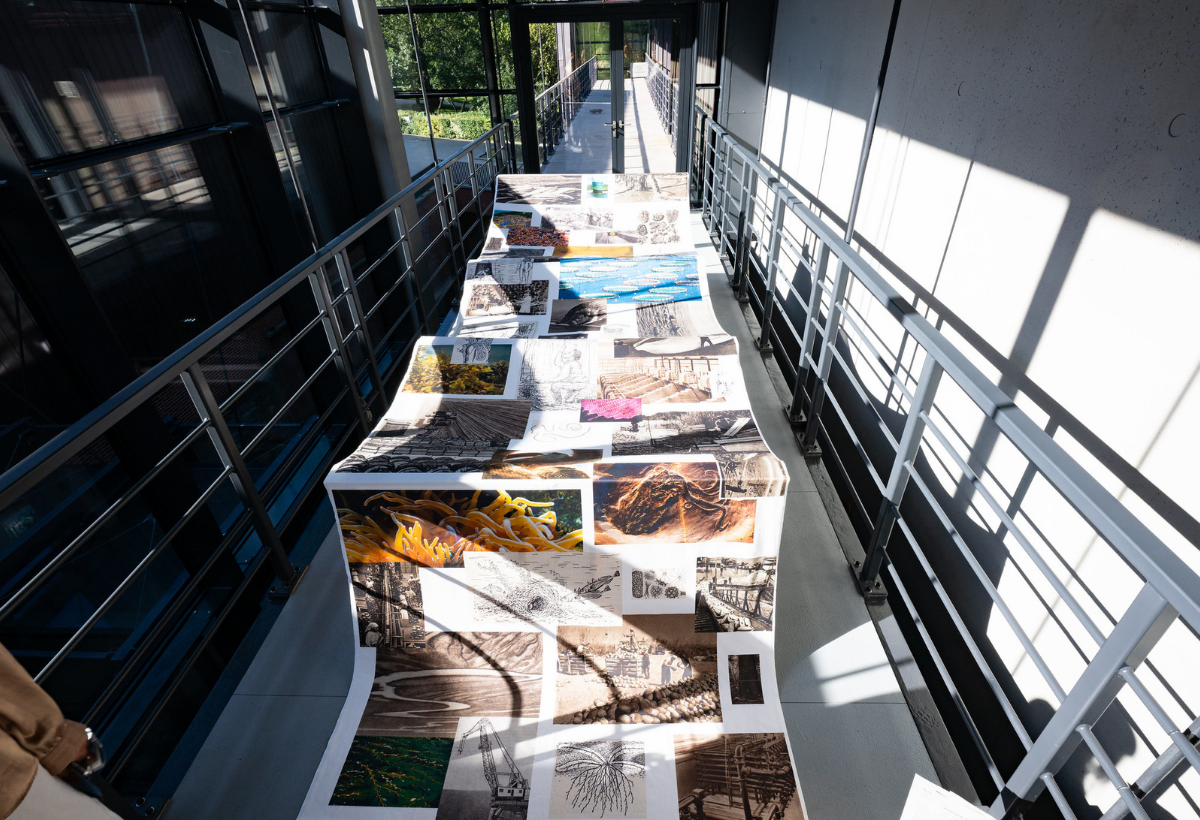
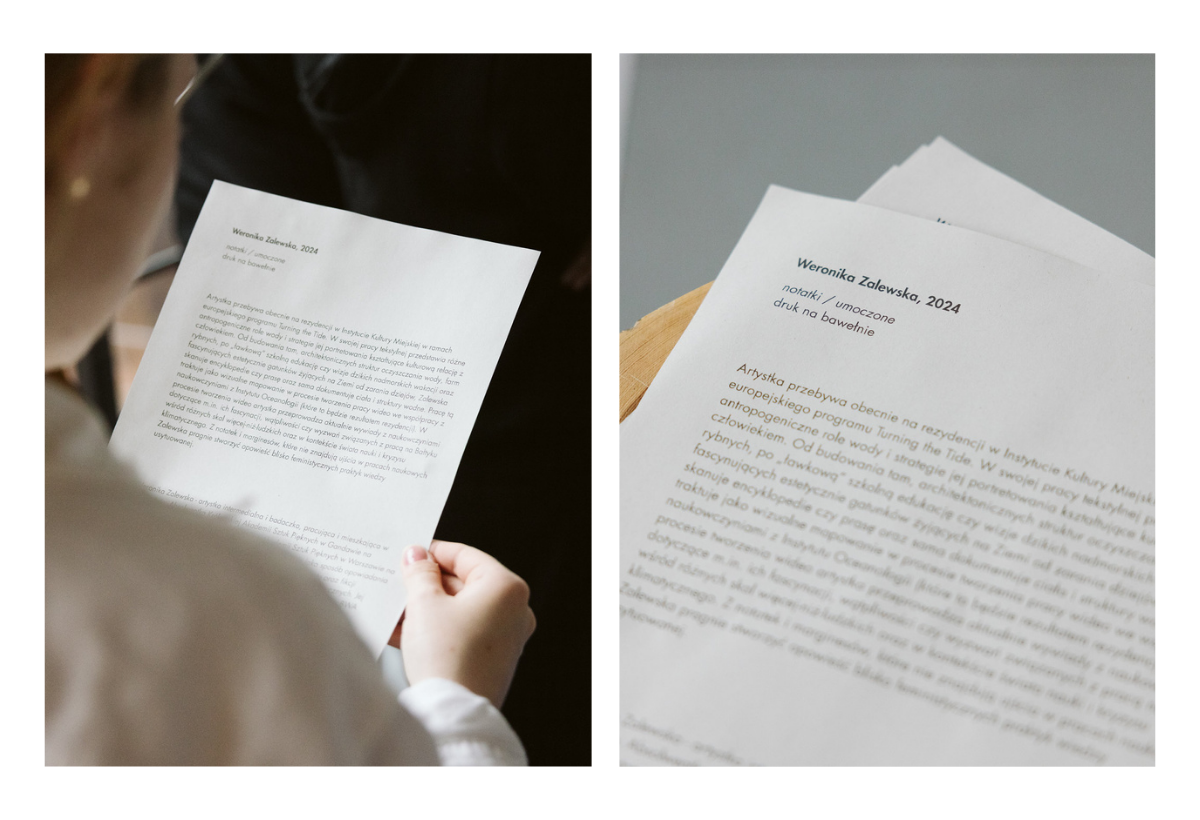
Weronika Zalewska is a cross-media artist, researcher and poet, working and living in Warsaw. She is weaving a narrative around water’s anthropogenic roles, using textile art to examine cultural relationships with aquatic ecosystems. Working with scientists from the Institute of Oceanology in Sopot, she maps out the challenges and beauty of working in the Baltic amidst the climate crisis. Her research combines local water bodies with broader environmental questions, framed through feminist and decolonial lenses.
(Photography: Łukasz Unterschuetz, Martyna Niećko)
IO PAN / Thinking waters, 2024
This short film functions as an initial distillation of Weronika Zalewska’s extensive research project conducted in collaboration with the Institute of Oceanology of the Polish Academy of Sciences (IO PAN). Operating at the intersection of artistic inquiry, feminist critique, and post-humanist theory, the project challenges conventional narratives of scientific practice.
The work is fundamentally rooted in the twelve in-depth interviews the artist conducted with female scientists at IO PAN during the summer of 2024. Zalewska deliberately moved beyond standard scientific discourse, focusing instead on the affective, embodied, and relational dimensions of their work. The scientists’ intimate relationships with the organisms and ecosystems, bodily experiences of marine expeditions, as well as the specific condition of being a woman within the institutional landscape of science, were the key lines of Zalewska’s inquiry.
The artist prioritized the anecdotal, the emotional, and the marginal – those experiential fragments and feelings that are routinely excluded from official scientific publications. Drawing on frameworks such as new materialisms and post-humanism, the project proposes an alternative narration of the female scientist’s condition, framing their labour not just as objective data collection, but as a complex, embodied, and affective entanglement with the non-human world.
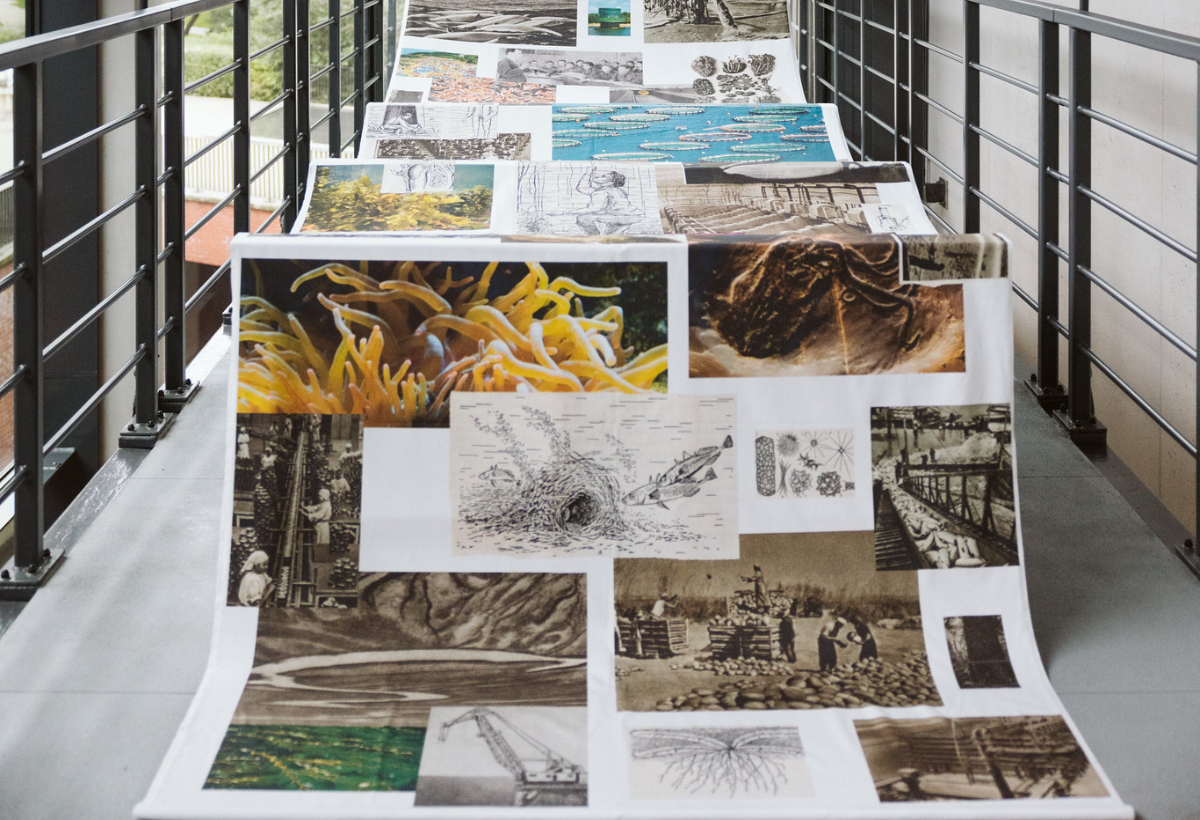
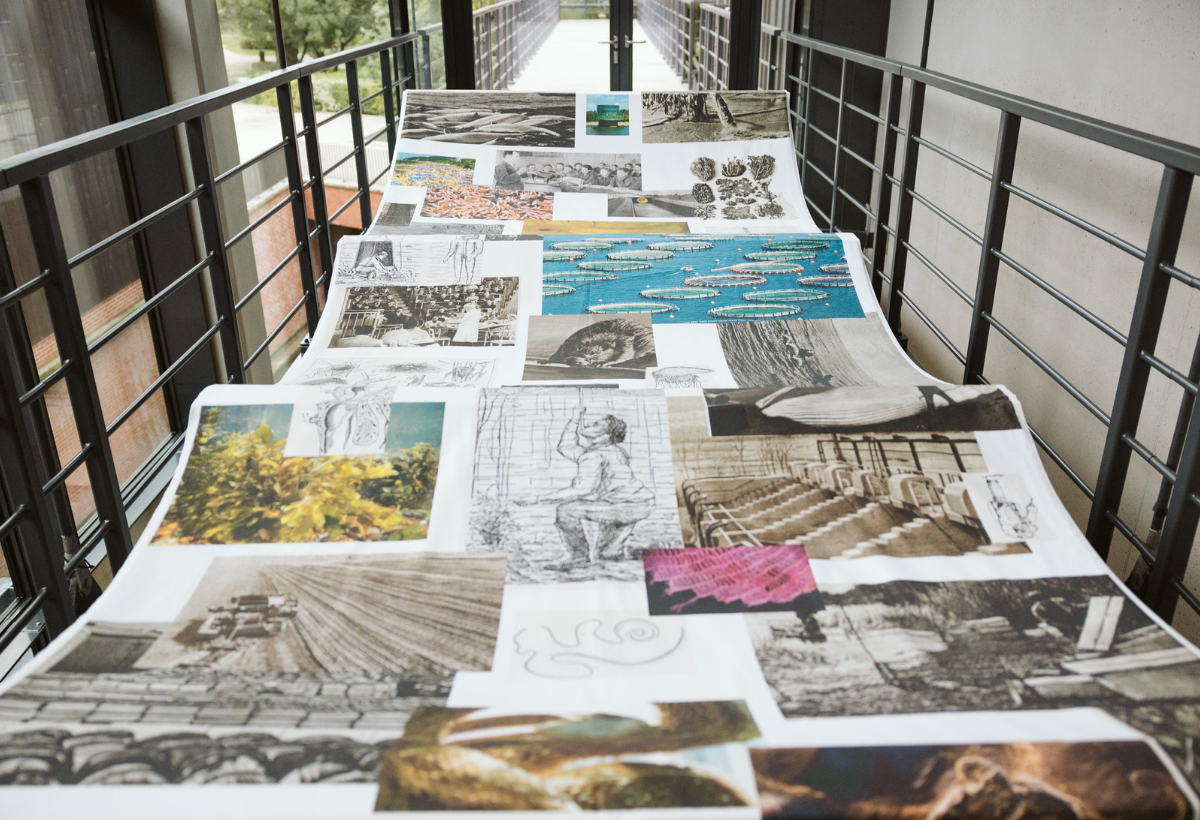
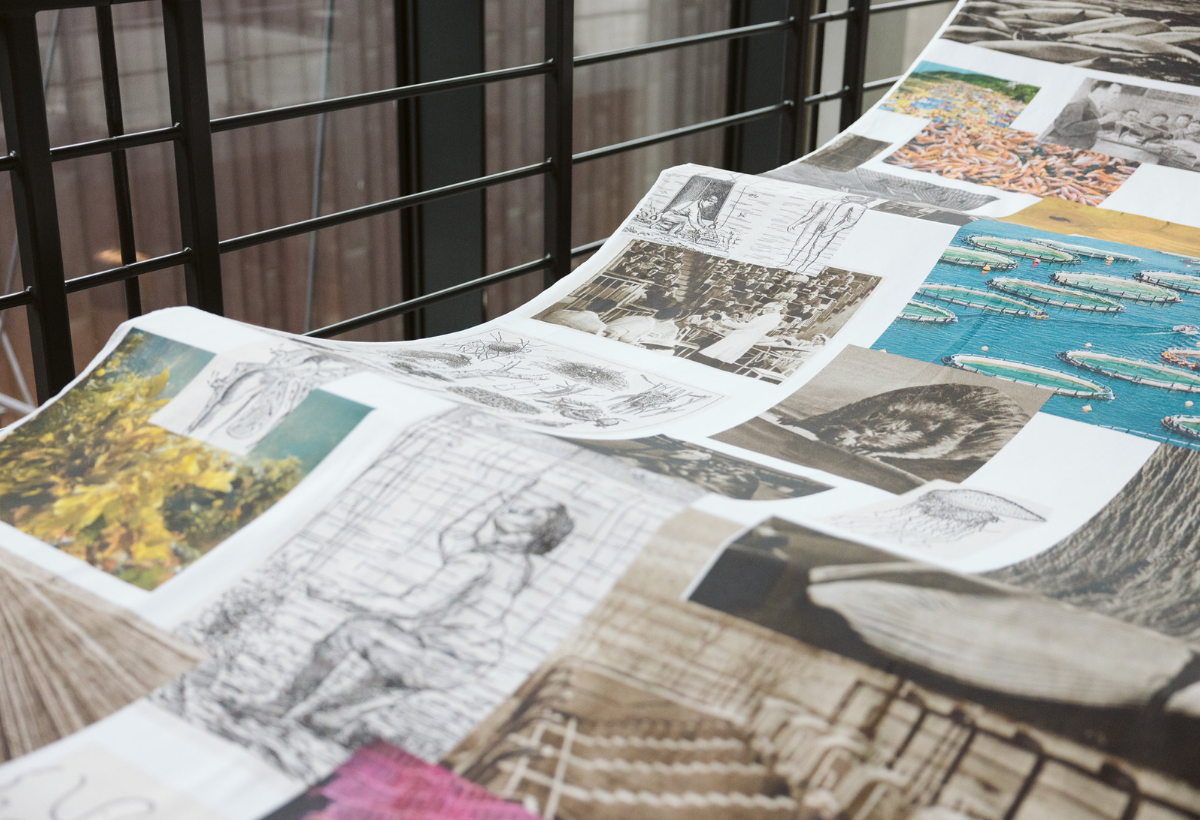
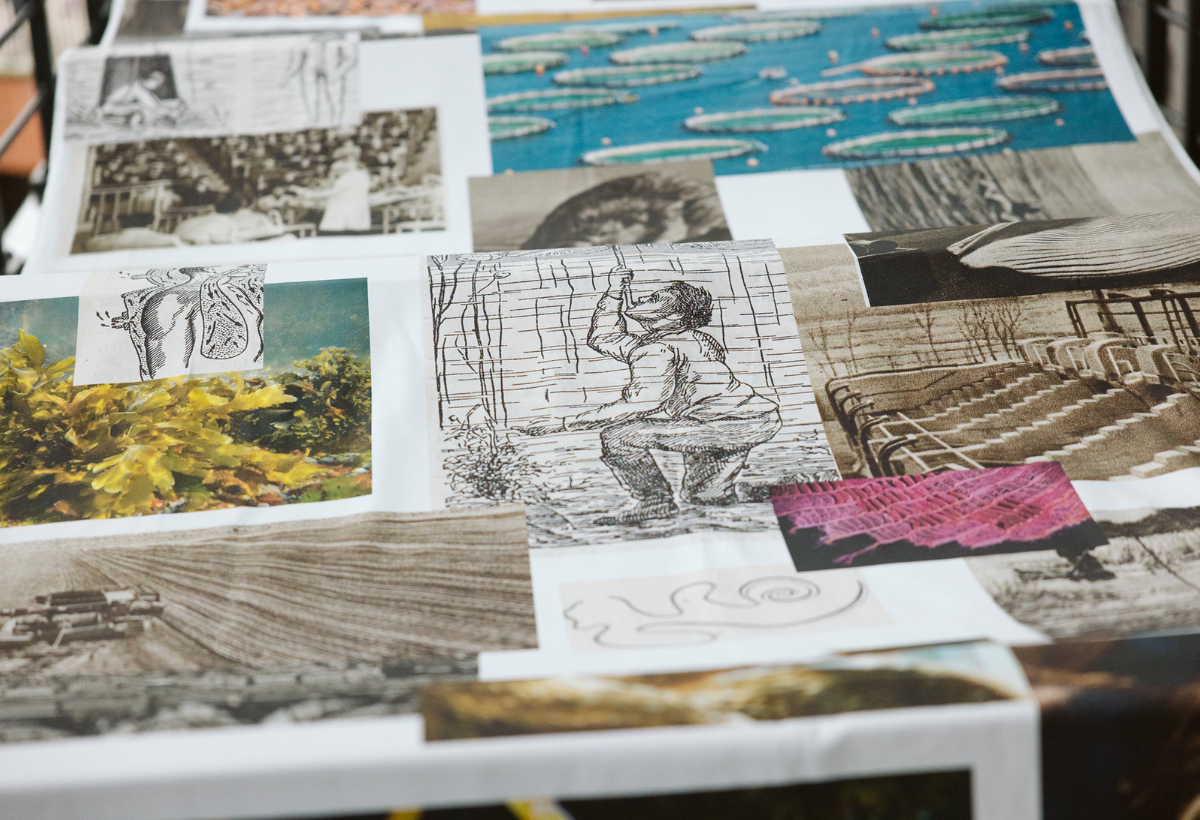
The visuals presented in this video are sourced from the rich expedition archives of IO PAN, providing a historical and technical backdrop that contrasts with the subjective nature of the interview content. This initial synthesis serves as a precursor to the project’s next phase: a planned artist residency aboard a research vessel, which will extend this exploration into a direct, bodily engagement with the oceanographic environment itself.