The 2024 edition of the Gdańsk Local Urban Lab 2 residency, developed within the framework of Turning The Tide, became a space for artistic experimentation, ecological reflection, and public engagement. Across several months, the programme brought together artists, local participants, experts, and young people in a shared exploration of urban waterways and Baltic marine life. Through walks, workshops, educational encounters, and multimedia production, the residency opened up new ways of thinking about environmental responsibility and the role of art in shaping more sustainable urban futures.
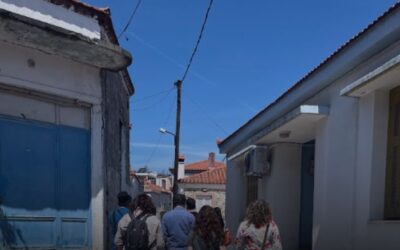
The residency began on 2 September 2024, when the selected artists started their three-month stay in Gdańsk. From the outset, their work focused on the often hidden natural dimensions of urban space and on the fragile biodiversity of the Baltic region. These two thematic strands, invisible waterways within the city and endangered life in the sea, shaped the direction of the projects and created a broad framework for public participation and artistic inquiry. One of the key moments in the programme took place on 29 September 2024, during a guided walk along the Kamienny Potok stream led by Rafał Kubiś, head of PTTK Sopot. The walk invited participants to discover parts of the landscape where streams now run underground and to imagine how these watercourses might one day return to the surface. As the group moved along the route, they learned about the history of the stream, observed its present condition, and reflected on the transformations imposed by urban development. The walk concluded at the Śwelińa river, where the conversation turned toward the future: what might these places look like if renaturalization became a real urban priority, and how could restored streams reshape both the ecological and social character of the area?
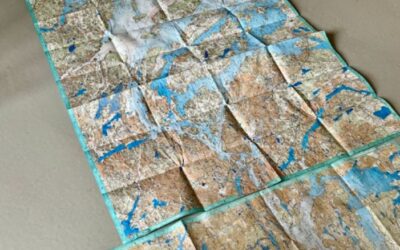
This speculative and participatory approach was developed further on 27 October 2024 during a creative workshop based on role-playing and mind mapping. Participants were invited to step into the perspectives of both human and non-human figures inhabiting the Kamienny Potok area. Through character cards representing, among others, a local boy, a creative soul, tadpoles, marsh marigolds, and other beings, they explored the landscape as a shared environment of multiple voices, needs, and vulnerabilities. Working with satellite maps, the group collaboratively imagined futures in which underground streams are restored and reintegrated into the urban fabric. The workshop combined play, ecological imagination,
and urban thinking, allowing participants to engage with environmental planning through empathy and creativity.
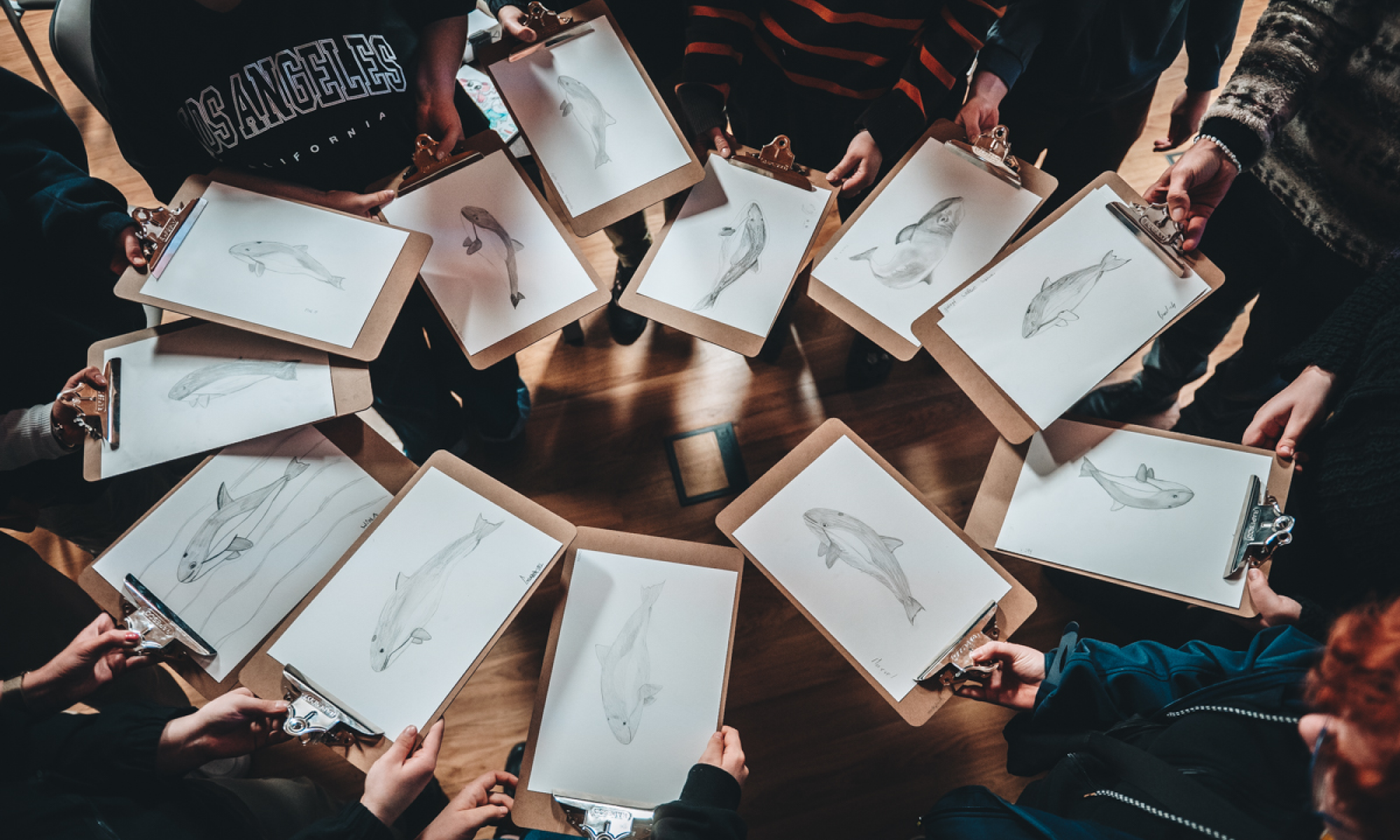
At the same time, October 2024 also saw the unfolding of a second important strand of the residency: educational and artistic activities devoted to Baltic Sea biodiversity, organized by Bartosh Zimniak. One of the highlights was an educational field trip to the Hel Seal Sanctuary, or Fokarium. A group of teenagers from the Gdańsk Health Centre crossed the Baltic Sea aboard a historic 1981 boat, turning the journey itself into a memorable encounter with the marine environment. The visit offered participants a closer understanding of the need to protect marine mammals and the wider ecosystems of the Baltic. It was not simply an educational excursion, but an embodied experience of the sea as a living, vulnerable environment requiring care and responsibility.
This experience was complemented by a creative workshop held at the MEWKA Foundation in Nowy Port. Led by Bartosh Zimniak and joined by guest expert Blanka Byrwa, a specialist in sea-based biomaterials, the workshop introduced participants to innovative ways of working with marine resources and ecological ideas. Inspired by the discussions and the field trip, the teenagers created Postcards for the Baltic Sea — artistic and poetic messages addressed to Nature. These postcards expressed not only environmental awareness, but also a personal and emotional relationship with the sea. The workshop demonstrated how artistic practice can deepen ecological understanding by making room for feeling, imagination, and individual expression.
As the residency moved into November and December 2024, the focus shifted toward production. Zuzanna Kołodziej finalized her project Free the Streams of Tricity, creating two 3D animations that visualized how selected underground streams in Gdańsk might be restored and returned to the city’s visible landscape. Using camera tracking and immersive design techniques, her work offered a compelling image of urban space reshaped through ecological sensitivity. The animations did more than illustrate a possibility: they proposed an alternative urban imagination, one in which infrastructure and nature are no longer opposed, but brought back into dialogue. During the same period, Bartosh Zimniak continued work on an educational game dedicated to endangered Baltic Sea species. Combining storytelling, interactive design, and environmental education, the project aimed to create an engaging tool for raising awareness about marine ecosystems and the threats they face. Because of the technical and conceptual complexity of the work, the game was not completed within the original residency timeframe. However, development continued beyond the official end of the programme, and the project was successfully completed in the first weeks of 2025. This extended process ensured that the final result met both artistic and educational ambitions, achieving a meaningful balance between accessibility, quality, and ecological impact.
Taken as a whole, the 2024 Gdańsk Local Urban Lab 2 residency demonstrated how art can operate as a form of environmental research, public pedagogy, and imaginative urban practice. Whether through walking hidden streams, speaking from the perspective of plants and animals, crossing the sea to meet marine life, or designing future-facing digital works, the residency invited participants to rethink their relationship with water, place, and non human worlds. In doing so, it contributed to a broader vision of waterfront cities not only as sites of climate vulnerability, but also as places where new ecological sensitivities and cultural futures can be actively created.