The weather forecast promised warmth for mid-September in Stockholm. We took it as a sign: a perfect weekend to start our first fieldwork trip around Lake Mälaren. We left the city early on Saturday, and still early in the morning, we passed the Bronze Age rock carvings at Hemsta, near Enköping. We couldn’t have chosen a better place to begin.
Another visitor was already there, welcoming us warmly. He told us about Ingwaz: a hero who journeyed beyond the known world in search of wisdom. His path, carved into stone around 1400 BCE, reminds us of Odysseus and the great sagas that bind human destiny to the balance of the cosmos. Later Swedish rulers claimed descent from him, grounding authority in a story of cosmic order. Where do we find wisdom now, and how do we return with it to our people?
About a week later, at the Nordiska Museet, we encountered Johan Turi’s depictions of Sámi life: clean, simple, beautiful visual testaments of resilience and landscape knowledge. At the Moderna Museet, Britta Marakatt-Labba’s embroidery offered another voice entirely: delicate in form, insistent in message. She stitches together worlds held together by relations: humans, animals, ancestors, unborn generations, birch forests, sacred landscapes. Not separate from nature, but intricately part of it.
We tried to see Sweden’s landscape not as scenery, but as time made tangible. The land itself tells stories stretching beyond human memory. The slow rebound of earth after crushing ice weight, the tilt of lakes adjusting to rising landmass, gentle hills marking where glaciers once retreated. Scratches on granite outcrops, barely noticed at first, turn out to be signatures of duration. Thousands of years ago, ice moved with patient force across this terrain. These lines are reminders: landscapes are not fixed, they’re alive.
Inside a gallery, crowds pressed close to Lars Tunbjörk’s photographs of 1990s shopping malls and amusement parks. Spaces where Sweden was remade into a consumer society. Witty, absurd, melancholy, sharp critiques of capitalism’s encroachment. What struck us was visitors’ devotion: each detail studied as if speaking of a past left behind. Yet the logic of consumption remains unchanged. Rare earths mined today for smartphones, wind turbines, weapon systems sustain the same habits pictured thirty years ago.
We tried looking differently. Hills, lakes, carvings, scratches; not static features, but evidence of processes connecting past, present, future. In Marakatt-Labba’s work, mountains and reindeer stride alongside the Áhkut, foremothers watching from the beginning toward futures still unfolding. Landscapes aren’t backdrops; they’re active participants in survival.
Around Stockholm, Lake Mälaren serves as the city’s reservoir, where water rests for ten to fifteen years before reaching the tap. One million people live in the city, 2.5 million in the wider region. As sea levels rise, plans to fortify Mälaren with higher locks and stronger barriers are underway. Slussen, the central hub regulating water between lake and Baltic, has been undergoing major redevelopment since 2016. The site is crucial: Mälaren lies 70 centimeters higher than sea level.
But perhaps instead of building higher walls, we might learn to see as Marakatt-Labba stitches: worlds held together not by force, but by relations.
In the north, Kebnekaise, Sweden’s highest mountain, lost its southern glacier peak to warming temperatures. The northern rocky peak overtook it. A striking symbol of climate crisis in action. Further south, Åre’s ski resort faces shorter snow seasons, relying increasingly on artificial snowmaking. Hammarbybacken, an artificial ski slope constructed from urban rubble in central Stockholm, rises 100 meters above sea level. Year-round training. The city’s contradictions in miniature.
Kiruna Church, one of Sweden’s largest wooden buildings from 1912, is being relocated five kilometers to make way for expanding iron ore mining. The world’s largest underground iron ore mine extends over four kilometers long, to depths exceeding two kilometers. Ground subsidence forces town relocation. Critics call it a ‘trompe l’œil,’ drawing attention from deeper impacts on Sámi reindeer herding lands.
The question returning from all these observations: what if the crisis we face cannot be solved by technical measures alone? Pouring concrete into higher dams, building barriers against rising seas, mining ever more ‘green’ metals: these protect current lifestyles but don’t ask harder questions. How do we live? What do we value? What relationships do we nurture with the living world?
Stockholm and Sweden force us to ask: what is progress, and at whose expense does it come? Still we extract—iron ore, copper, lithium, rare earths—for the turbines, batteries, and smartphones that sustain our western lifestyle. Without questioning how we live, mining what we want only accelerates the destruction. More barriers, higher dams, greener metals extracted from deeper holes, it all preserves habits that are unraveling the very worlds we depend on.
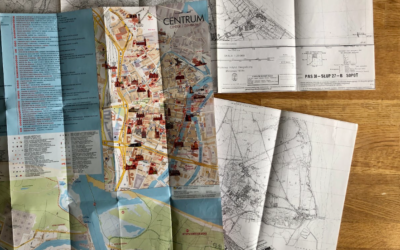
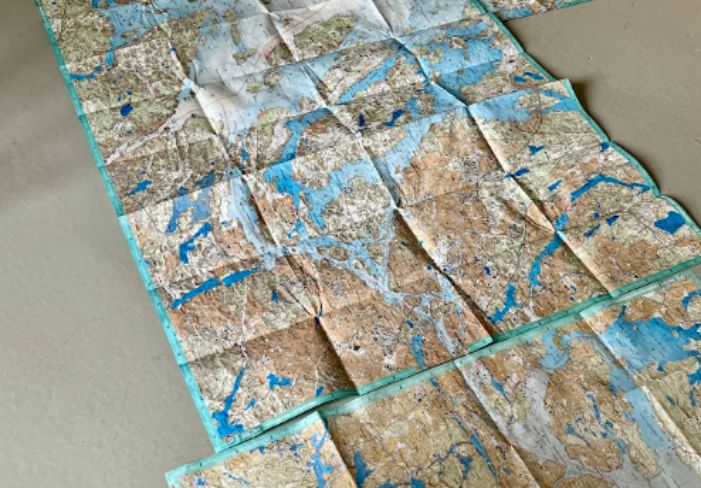
For Turning the Tide, Stockholm poses a different question than Gdańsk, Vienna, or Evia. Where those cities confront visible infrastructure and external pressures, Stockholm asks us to read the land itself: as a living map connecting ancient carvings, indigenous cosmologies, glacial scars, and industrial frontiers. Not separate layers, but a single fabric being rewoven. The choice isn’t technical. It’s ethical. Do we continue weaving worlds that serve only our present comfort, or do we learn to stitch in futures beyond our own lifetimes?