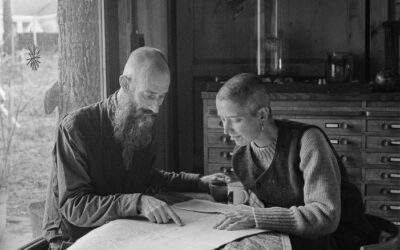
What does it feel like to walk into Gdańsk, with all its rivers and water around it? What inspired DEAR HUNTER? Read on to find out. This is their story of arriving, seeing, and getting inspired to make the map.
“A little nervous, we set off for a country neither of us had ever visited. A long drive ahead, an overnight stop in Germany, and above all curiosity, mixed with a certain unease, about what six weeks in northern Poland would feel like. The Baltic Sea, yes, but also a place noticeably closer to Ukraine, a country living under invasion. Or rather: closer to a country that feels that proximity intensely. At least, that’s what we assumed, fed by the media we consume back in the Netherlands.
The first evening, having arrived at an apartment on the edge of town, we walked into the old city on foot. A genuine ‘wow’ moment. We simply hadn’t expected this. History breathes here. A Hanseatic city that lives with the tide: grand merchants’ houses, the impressive wooden Crane leaning over the water, the Motława river sliding through the city on its way to the sea, the Wisła, the longest river of Poland, passing it just a stone’s throw away. Crowds everywhere, and architecture that keeps surprising you around every corner.
That crowds never really thinned out. Although the wider region around Gdańsk turned out far quieter in the weeks that followed, when we visited polders, a couple of national parks, and followed the coastline east and west. Above all, we encountered kind people trying to make something of their lives: people for whom the glass is half full, not half empty. People who are glad and proud to belong to Europe, and where hope for cooperation lives on, even if it is mostly the hope of collectivity keeping Russia out the door.
And that, it seems, is what drives the transition here. Not the rising Baltic, which in all her calm and near-total absence of waves looks more gentle than threatening, not even the rivers winding through the city toward the sea, but the human threat from the east. Proximity, more than water level, is what pushes the (energy) transition forward. To stay out of the aggressor’s grip. That seemed the engine in our eyes.
Is the Polish government doing the right thing? Few here seem convinced. We, the people, will ultimately have to do it ourselves, we kept hearing. Without getting sentimental about it, that conclusion cuts two ways: trust is lacking, but the work ethic of the Poles certainly is not.
For Turning the Tide, Gdańsk poses a familiar question in a new key. From the quay, the city shows off its interventions: old sluices, the engineered waterfront, visible works of pride right in the centre. But the real pressures sit elsewhere: upstream, inland, out at the edges where the polders drain and the rivers carry whatever the hinterland sends them.
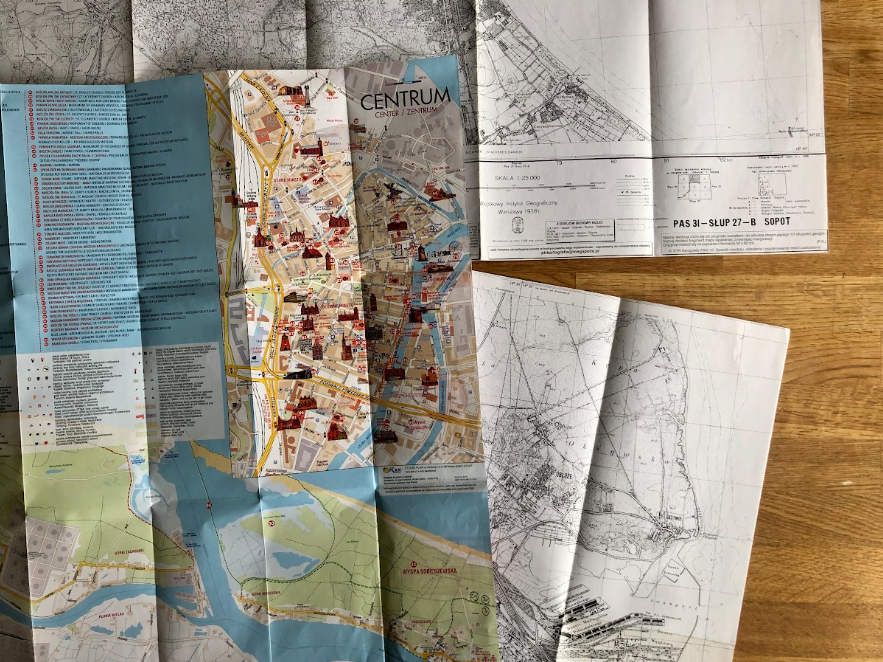
As ever, the map of Gdańsk rewards close reading. Amid the signs of everyday life, the harbour and the city itself, there is barely a trace of the defence against the east, and just as few energy projects that stand out. What the city does show, everywhere, is a fine-grained network of small-scale water infrastructure, still very much in use. The larger interventions sit further out, towards the edges: pushed steadily outward to the periphery. We invite you to do that labour of close reading with us over the coming posts, as we move on to the other cities we visited and mapped, and finally, to the lessons and insights we’ll share with you.”